
Quick Answer
An earth drilling gearbox for a piling rig is chosen on four things, in order: output torque sized to the pile and ground, the mounting and output interface that matches your rig, the sealing that keeps spoil and water out, and an output bearing rated for the side and thrust loads a vertical drill string imposes. Headline torque alone will not tell you whether a gearbox survives piling duty — the shock loading and contamination do the damage, and those are set by construction, not by the spec-sheet number.
If you are sourcing the gearbox for a piling or foundation rig — whether you build the rigs, run them, or import drilling attachments — the gearbox is the component that decides whether the machine is productive or parked. It takes the shock every time the tool bites, and it carries the drill string. Get it wrong and you lose piles per day; get it very wrong and you lose the gearbox.
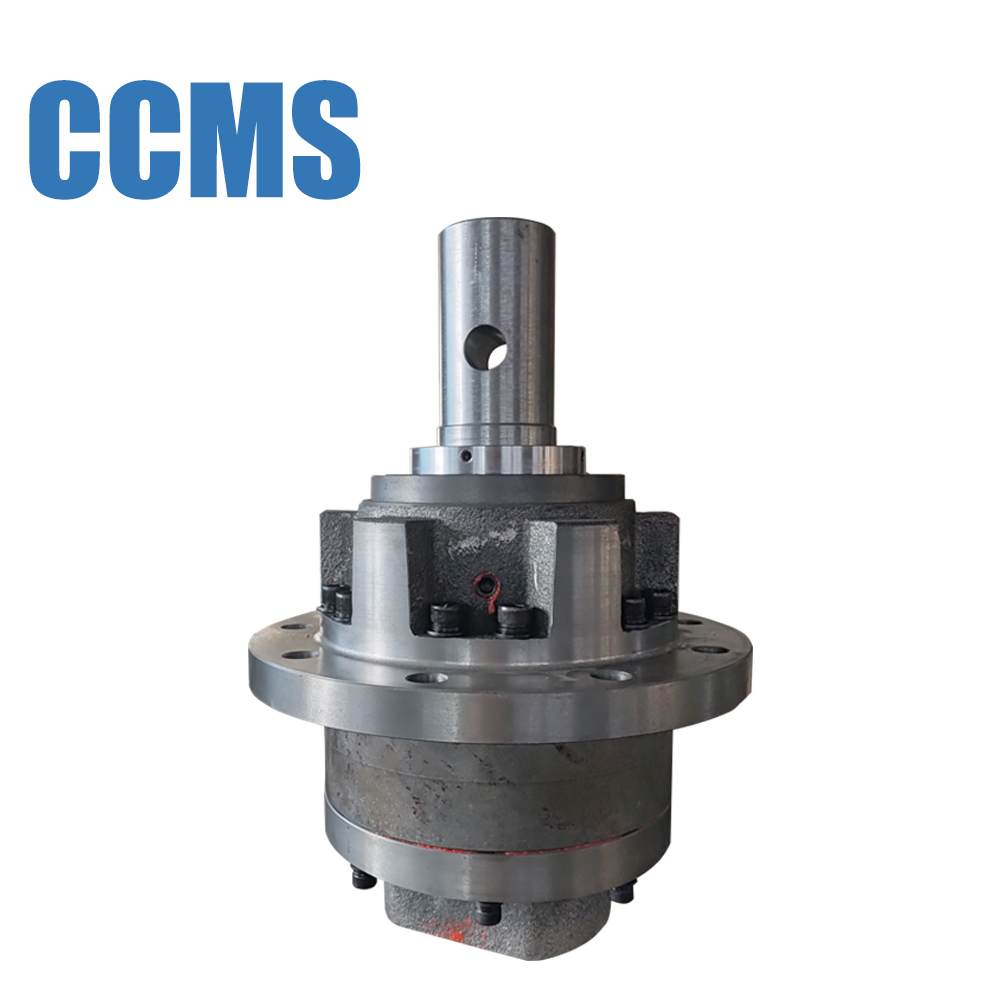
We build the earth drilling planetary gear reducer that sits inside these drives, so this guide is written from the failures we see come back, in the order that prevents them.
Where the gearbox sits in a piling rig
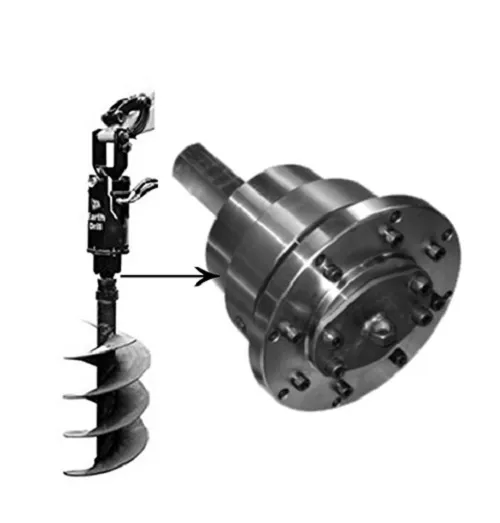
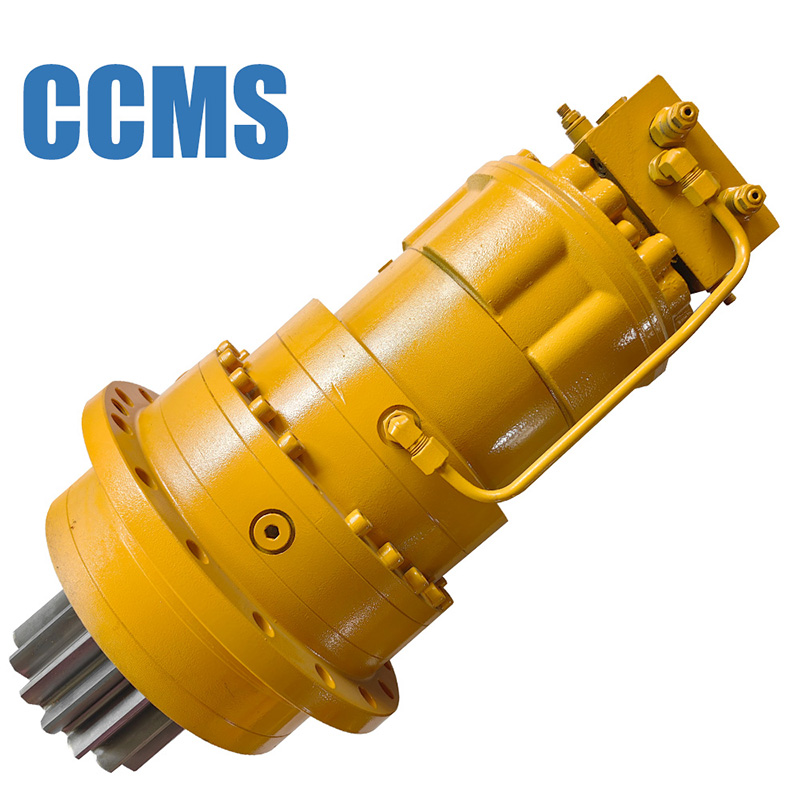
In almost every hydraulic piling and foundation rig the power path is the same. The carrier's hydraulic system feeds a hydraulic motor. The motor spins fast at modest torque. The planetary gearbox converts that into slow rotation at very high torque, and passes it to the drill string — an auger, a bucket, a continuous flight auger, or a Kelly bar carrying the tool.
Two jobs, one housing. The gearbox multiplies torque, and it also acts as the structural mount that carries the drill string's weight and reaction loads. That second job is the one buyers forget, and it is often the one that fails.
Why piling duty is harder on a gearbox than it looks
Piling looks like steady drilling. Inside the gearbox it is anything but. Three things separate it from ordinary rotation duty.
- Shock loading. The tool hits a hard layer, stalls, and releases. Each cycle sends a torque spike back up the string into the gearbox, far above the average working torque. In mixed or stony ground this happens continuously.
- Contamination. The gearbox works nose-down over an open hole full of spoil, water and slurry. Everything that comes out of that hole is trying to get past the output seal.
- Vertical loading. The drill string hangs its own weight on the output, and crowd force presses down through it. This is thrust and side load the gear teeth never see but the bearings and housing must carry.
The practical takeaway. A gearbox rated for a torque figure on a test bench and a gearbox that survives a season of piling are not the same product. What separates them is shock tolerance, sealing and bearing capacity — none of which is captured by the torque number alone.
Step 1 — Match torque to the pile, not just the soil
Output torque is the headline figure, and it is set by two things together: the pile you are forming and the ground you are forming it in.
A wider pile needs more torque for the same ground, because the tool is cutting a larger annulus. Harder ground needs more torque for the same diameter. The two multiply, so a large-diameter bored pile in dense ground sits at the top of the torque requirement and a slim displacement pile in soft ground sits near the bottom.
| Factor | Pushes torque up when… | Notes |
|---|---|---|
| Pile diameter | Larger bore | Torque rises faster than diameter — cutting a bigger annulus |
| Ground hardness | Dense, stony, rock | Sets the peak, not the average, demand |
| Pile depth | Deeper | Adds string weight and friction; affects thrust more than torque |
| Tool type | Full-face bucket vs auger | Different cutting resistance for the same hole |
| Duty cycle | High piles-per-day target | Sustained load and heat, less recovery time between piles |
Selection factors, not model ratings. Actual rated torque depends on the specific gearbox; request the data sheet for CCMS model figures.
Size for the peak, then add a shock margin. Choose the gearbox so its rated output torque covers your hardest ground and largest pile, then apply a service factor for the stall-and-release cycles piling imposes. Selecting on average torque is the single most common reason an earth drilling gearbox comes back damaged. The method for turning working torque into a selected figure is set out in our companion piece on reducer ratio and load capacity.
Step 2 — Get the mounting and output interface right
A gearbox with the right torque that will not bolt to your rig is no use. Two interfaces have to match your machine exactly.
The mounting. Earth drilling reducers are commonly flange-mounted, which is why our category is built around the flanged earth drilling planetary gear reducer. The flange pattern, pilot diameter and fixing holes must match your rig's frame or power head. This is a hard interface — it either fits or it needs re-machining.
The input. The gearbox has to accept your chosen hydraulic motor. Motor mount pattern, shaft or spline, and displacement all have to be specified together, because the motor and gearbox jointly set your output speed and torque.
The output. The output flange or spline connects to the Kelly bar, auger or tool adaptor. This has to match your drill string, and it has to be sized for the loads in Step 4, not only for the torque.
Specify the three interfaces together. Input motor, mounting flange and output connection are a set. Change one and the others may need to change. Sending all three at once is the fastest route to a gearbox that drops straight onto your rig.
Step 3 — Sealing and contamination resistance decide service life
On a piling rig the gearbox points down into a hole full of the exact things that destroy gearboxes: abrasive spoil, water, and drilling slurry. The output seal is the boundary between that and the gear oil, and it is doing the hardest job on the machine.
Contamination resistance is therefore not a nice-to-have on an earth drilling gearbox — it is a primary selection criterion. A gearbox that carries more torque than you need but has weak sealing will fail before a correctly sealed unit of modest rating. When we describe our earth drilling reducers as offering strong contamination resistance, that is aimed squarely at this failure mode.
Practical questions to ask any supplier: what is the output seal arrangement, is it protected against direct spoil contact, and what is the recommended oil-change interval for continuous piling duty? A vague answer is itself an answer.
Step 4 — Size the output bearing for the side and thrust loads
This is the step that separates people who have run piling rigs from people who have only read spec sheets. The torque rating tells you nothing about whether the output can carry the drill string.
A vertical drill string loads the output in two ways the gears never feel. It hangs its own weight downward as axial thrust, and any out-of-plumb or uneven cutting puts side load on the output shaft. Both land on the output bearing and the housing. On deep piles with heavy Kelly bars and tooling, this loading frequently governs the gearbox size — the bearing reaches its limit before the gear teeth do.
This is why a serious earth drilling reducer uses a large-diameter output bearing, and why we do not publish output radial and axial ratings as a single catalogue number — they depend on your string weight and geometry. Send us the drill string weight and the tool, and we will confirm the output bearing is right for it, with expected life for your duty.
Matching the gearbox to your rig type
Different piling methods load the gearbox differently. The headings below are orientation; the actual specification always comes back to torque, interface, sealing and bearing for your specific machine.
| Rig / method | What the gearbox sees | Priority in selection |
|---|---|---|
| Auger / short-flight piling | Repeated stall-and-release, shallow to medium depth | Shock tolerance, sealing |
| Continuous flight auger (CFA) | Sustained torque, continuous cut, high duty | Thermal duty, sustained torque, sealing |
| Bored / large-diameter piles | Very high torque, heavy Kelly bar and tool | Peak torque, output bearing capacity |
| PV solar pile foundations | Many shallow piles, stony ground, high cycle count | Shock tolerance, cycle life, quick duty |
| Excavator-mounted auger drives | Carrier-limited flow, mixed ground | Flow match, compact flange mount |
Orientation only. Confirm the full specification against your rig and ground. Photovoltaic pile foundation work is an application our earth drilling reducers have run in the field.
Solar pile foundation work deserves a note because volume has grown quickly and it punishes the wrong gearbox. It combines high cycle counts with frequently stony ground, so it rewards shock tolerance and cycle life over headline torque. If your rig is excavator-mounted, our guide on choosing the right auger drive covers the flow-matching side, and our piece on hydraulic spiral drills for pile foundation covers the drilling tool.
How we build earth drilling reducers
For an earth drilling gearbox, survival is decided in manufacturing as much as in design, because shock duty finds every weakness in the metal.
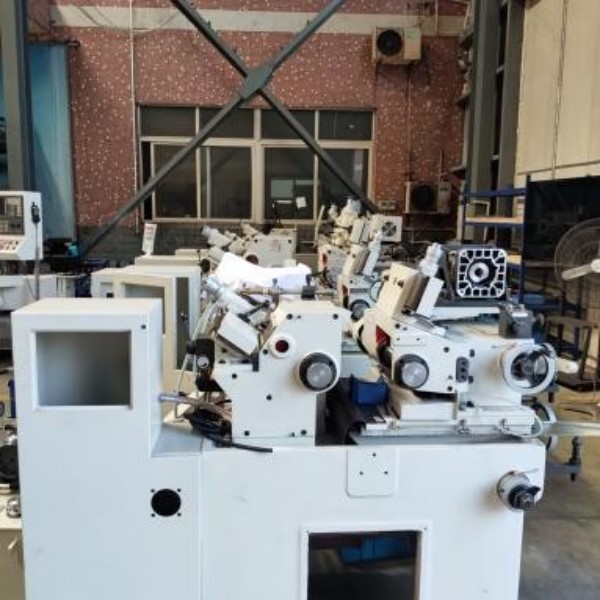
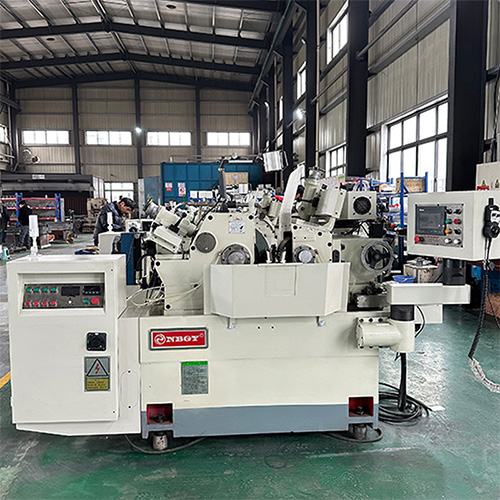
We build these reducers at our own plant in Ningbo. Core rotating components — the parts that carry the shock — are produced by closed-die forging rather than casting, giving a grain structure that follows the part instead of being cut through by machining. Machining is done on our own CNC equipment to a control accuracy of up to 0.01 mm, which is what makes real load sharing between the planet gears possible; geometry error is exactly what concentrates a stall spike onto one gear and cracks it. Our production is certified to ISO 9001, and every unit receives full inspection rather than sampling.
These reducers are running on real jobs including photovoltaic pile foundation work, and our units are supplied to domestic manufacturers including XCMG Group and exported to markets including Russia, Australia and India. You can see the equipment and inspection setup on our Our Strength page, and the current range on the earth drilling planetary gear reducer category, including our excavator deep-hole drive and hole digger auger drive.
We build to customer requirements rather than from a fixed catalogue, so if your rig needs a specific flange, ratio or output interface, that is the normal starting point rather than a special request.
What to send us for a quote
The more of this you send, the faster and more accurate the quote. Missing items are the usual reason a quotation stalls.
- Pile parameters. Diameter, depth and method (auger, CFA, bored, PV pile).
- Ground conditions. Soil type and whether you hit rock or hard layers.
- Carrier and hydraulics. Machine type, available hydraulic flow and working pressure.
- Interfaces. Preferred hydraulic motor, mounting flange pattern, and output connection to your drill string.
- Drill string. Weight of the string and tooling, so we can size the output bearing.
- Duty. Target piles per day or hours per day, so we can factor shock and heat.
Frequently Asked Questions
What torque does an earth drilling gearbox for a piling rig need?
It depends on the pile diameter, the ground hardness and the drilling method together, so there is no single figure. A large-diameter bored pile in dense ground needs far more torque than a slim pile in soft soil. Size the gearbox so its rated output torque covers your hardest ground and largest pile, then add a service-factor margin for the stall-and-release shock loading that piling imposes.
Why do earth drilling gearboxes fail if the torque rating looks high enough?
Because piling failures are usually caused by shock loading, contamination and output-bearing overload rather than by steady torque. A gearbox rated for high torque on a test bench can still fail in the field if it has weak sealing against spoil and water, or an output bearing that cannot carry the weight and side load of the drill string. Torque rating alone does not capture these.
What mounting does a piling rig gearbox use?
Earth drilling reducers are commonly flange-mounted. The flange pattern, pilot diameter and fixing holes must match your rig's frame or power head exactly, so it is a hard interface that either fits or needs re-machining. The hydraulic motor mount at the input and the output connection to your drill string must be specified at the same time, because all three interfaces work together.
How important is sealing on an earth drilling gearbox?
It is a primary selection criterion, not a detail. The gearbox works nose-down over an open hole full of abrasive spoil, water and slurry, all of which attack the output seal. A well-sealed gearbox of modest rating will outlast a higher-torque unit with weak sealing. Ask any supplier about the output seal arrangement and the recommended oil-change interval for continuous piling duty.
Can you build an earth drilling gearbox to match my existing rig?
Yes. We build earth drilling planetary gear reducers to customer requirements rather than from a fixed catalogue, so a specific flange pattern, ratio, hydraulic motor mount or output interface is a normal starting point. Send us the rig details, drill string weight, ground conditions and duty cycle and we will confirm a gearbox specification that drops onto your machine.
What gearbox suits solar pile foundation work?
Solar pile foundation drilling combines high cycle counts with frequently stony ground, so it rewards shock tolerance and cycle life over headline torque. A gearbox with strong shock resistance, good sealing and an output bearing sized for the string, matched to your excavator's hydraulics, is the typical choice. Our earth drilling reducers have run in photovoltaic pile foundation applications.
Spec the gearbox for your rig
Send us your pile parameters, ground conditions, carrier hydraulics and drill string. Our engineering team will confirm the torque, flange, sealing and output bearing for your rig. We reply to technical enquiries within 24 hours.
Request a Gearbox Quote