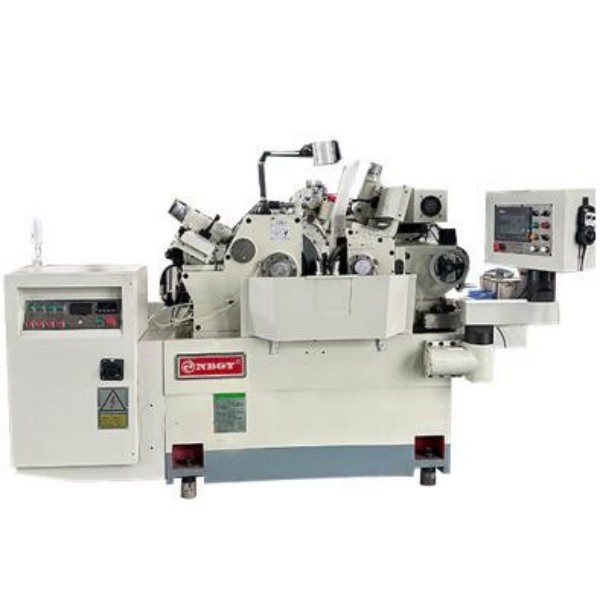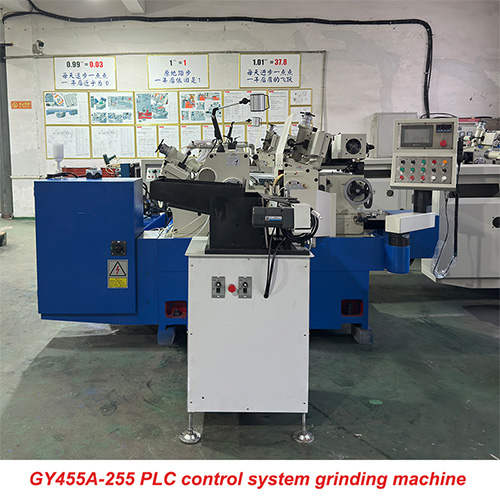

Global Centerless Grinding Machine Market Landscape & Supply Chain Hotspots (2026)
In 2026, the global centerless grinding machine market is undergoing a profound shift. Geographical dominance is realigning, supply chains are being rewritten, and trade dynamics are creating both risks and massive opportunities for manufacturers and buyers alike. If you’re sourcing, investing, or competing in precision grinding equipment, understanding these market shifts isn’t just helpful—it’s critical for staying ahead.
The Current Global Market Share Breakdown
Let’s start with the hard numbers defining today’s competitive landscape. Europe remains the largest regional market for centerless grinding machines, holding approximately 30% of the global share in 2025. Led by industrial powerhouses Germany and Italy, this region’s strength stems from its dense aerospace, automotive, and high-end precision engineering clusters.
North America is the second-largest segment, accounting for roughly 22% of the market. Driven by reshoring initiatives in the U.S. and strong demand from EV and aerospace sectors, it’s a high-value, competitive arena.
The Asia-Pacific region, led by China, Japan, and South Korea, collectively commands a significant portion—with China alone representing about 12% of the global market. What’s truly remarkable, however, is the explosive growth in Southeast Asia and India, which are now the fastest-growing markets worldwide, posting annual growth rates between 15% and 20%.
China’s Explosive Export Growth: A Game-Changer
The most compelling supply chain story in recent years is China’s rise as a major exporter of centerless grinding machines. In 2025, Chinese exports hit $1.24 billion, marking a staggering 41.2% increase since 2021.
This surge isn’t just about volume—it’s about strategic positioning. Chinese manufacturers are no longer competing solely on low cost. Modern CNC centerless grinders from leading Chinese brands offer sub-micron precision (as low as 0.001mm) at 20–30% lower price points than comparable European or Japanese models.
Key export destinations for Chinese centerless grinders:
Southeast Asia (Vietnam, Thailand, Malaysia) – the #1 growth region
India – rapidly expanding automotive and precision manufacturing
Eastern Europe & the Middle East – “Belt & Road” initiative markets
This shift is forcing a global rebalancing. Buyers in emerging markets now have a viable, high-quality alternative to traditional Western suppliers, while Western brands are pushed to double down on ultra-high-precision, AI-integrated, and custom grinding solutions.
Supply Chain Reconfiguration: The “China + 1” Strategy
Geopolitical tensions, tariff uncertainties, and pandemic-era disruptions have triggered a massive supply chain restructuring in the centerless grinding sector. The old model—single-source manufacturing—has been replaced by regionalized, resilient networks.
1. Tariff Impacts & Trade Barriers
U.S. tariffs on imported machinery have added 8.5% to the cost of Chinese machines entering the North American market. Similarly, EU regulatory standards are tightening, creating higher barriers for entry. These costs are reshaping trade flows:
Chinese firms are accelerating local assembly plants in Southeast Asia to bypass tariffs.
Western brands like Glebar and Danobat are expanding nearshore production (e.g., Mexico for the U.S., Poland for the EU).
2. Regional Manufacturing Hubs
The industry is moving toward a multi-hub supply chain model:
Western Hub (EU/US): Focus on high-end, custom, AI-integrated precision grinders for aerospace, medical, and semiconductor applications.
China Hub: High-volume production of mid-to-high-end CNC grinders for global export.
Southeast Asia Hub: Emerging assembly and light manufacturing base serving Asia-Pacific markets.
This “China + 1” strategy—diversifying production beyond China—has become the industry standard, reducing risk while keeping costs competitive.
Key Competitive Landscape: Who’s Leading in 2026?
The global centerless grinding market is consolidated, with the top 5 manufacturers capturing over 35% of global revenue. Here’s how the leadership stack ranks:
European Leaders (High-Precision Premium Segment)
Schaudt Mikrosa (Germany): The gold standard for ultra-precision grinding, dominant in aerospace and high-end automotive.
Junker & Danobat: Renowned for robust, high-efficiency CNC grinders and automated lines.
Asian Powerhouses
Koyo Machinery & Micron Machinery: Japanese leaders in reliability and precision for mass-production environments.
Chinese Champions: Wuxi Machine Tools, Hanjiang Machine Tool, Hangzhou Machine—rapidly closing the technology gap with strong R&D and smart factory integration.
North American Niche Players
Glebar & Acme Manufacturing: Specialists in advanced applications, including EV components and medical parts.
The competitive battleground has shifted from price alone to precision performance, automation integration, delivery speed, and global service networks.
Hotspots: The Fastest-Growing Regional Markets
1. Southeast Asia: The Undisputed Growth Leader
Countries like Vietnam, Indonesia, and Thailand are seeing 20%+ annual growth in centerless grinding demand. Drivers include:
Massive EV and electronics manufacturing relocation from China.
Booming automotive parts and bearing production.
Infrastructure investments fueling demand for precision machinery.
2. India: The Next Manufacturing Giant
India’s centerless grinding market is growing at 18%+, fueled by its “Make in India” campaign and a surging automotive sector (including EVs). It’s now one of the top importers of Chinese and Taiwanese centerless grinders.
3. Mexico: Nearshoring’s Big Winner
For the U.S. market, Mexico has become a critical hub. Foreign direct investment in Mexican precision manufacturing is up 40% since 2022, as companies build grinding and machining facilities close to the North American market to cut lead times and avoid tariffs.
Supply Chain Challenges & Strategic Opportunities
Key Challenges in 2026
Component Shortages: High-grade spindles, linear guides, and CNC controls remain constrained, extending lead times to 16–20 weeks for premium models.
Cost Volatility: Energy and raw material price swings impact global pricing strategies.
Logistics Gridlock: Ocean freight uncertainties keep regional distribution networks a top priority.
Strategic Opportunities for Buyers & Sellers
Dual-Sourcing Strategies: Combine cost-effective Chinese/Taiwanese machines for high-volume work with premium European/Japanese grinders for ultra-precision jobs.
Used & Retrofit Market: Strong demand for intelligently retrofitted used grinders offers budget-friendly precision for small and medium-sized manufacturers.
Localization Wins: Manufacturers who establish regional service centers and parts warehouses in growth markets gain a decisive competitive edge.
What’s Next? Market Outlook to 2030
By 2030, the global centerless grinding machine market is projected to surpass $1 billion, with a 3.2–3.9% CAGR from 2026 levels. The regional balance will shift further:
Asia-Pacific will grow to 18%+ of global share.
Southeast Asia and India will collectively outpace all other regions.
AI-integrated, IoT-connected smart grinders will represent 40% of new machine sales.
Final Thoughts
The global centerless grinding machine market is at an inflection point. European quality, Chinese scale, and Southeast Asian growth are reshaping the industry. For buyers, this means more choices, better value, and flexible supply chain options. For manufacturers, success will depend on agile regionalization, technological innovation, and customer-centric service.
Whether you’re sourcing a single high-precision grinder or building a global manufacturing network, understanding these market and supply chain dynamics is your most powerful competitive tool in 2026 and beyond.
Related News
- CNC Machining Castings: Machining Allowance, Datums and Defects
- CCMS Industrial Delivers Precision CNC Parts for Advanced Automation Equipment Applications
- CNC Machining Design Guide: Make Parts Easier to Quote and Produce
- How to Select the Right Centerless Grinder for Your Precision Machining Shop
- How High-Torque Gearboxes Improve Uptime for Excavator and Drilling Fleet Operations
- CNC Machining Surface Finishes: How to Specify Texture and Treatment
Leave me a message
New Products