

Industry News
 07 2026-09
How High-Torque Gearboxes Improve Uptime for Excavator and Drilling Fleet Operations
On every construction site, mining pit, and drilling operation, one factor determines project profitability more than anything else: uptime. Construction and drilling professionals know firsthand that engine power means very little if your transmission system cannot sustain heavy loads, resist constant shock, and hold precision through thousands of operating hours. For excavators, loaders, and drilling rigs operating in unforgiving environments, a premium heavy-duty gearbox is not just a replacement part—it is the backbone of consistent, long-term machine performance.
 27 2026-08
CNC Machining Surface Finishes: How to Specify Texture and Treatment
Select a CNC machining surface finish from the part's function: sealing, sliding, bearing, fatigue, cleaning, corrosion protection, electrical contact or appearance. First specify the required surface texture on the relevant features. Then specify any post-machining treatment, including its governing standard, preparation, masking, color or appearance, dimensional allowance and acceptance method. “As machined,” an Ra value and a coating name answer different questions.
 27 2026-08
CNC Machining Materials: How to Choose the Right Metal for Your Part
Choose a CNC machining material by translating the application into measurable requirements, screening suitable material families, then confirming the exact grade, condition, stock form, machining route and finish with the supplier. Compare finished-part cost and risk—not only price per kilogram. A cheaper alloy can cost more if it needs slower machining, extra stress relief, more stock removal, special tooling or additional surface protection.
 17 2026-08
CNC Machining Inspection: A Buyer's Quality Control Checklist
A useful CNC machining inspection plan states what must be measured, the datum or reference used, the measurement method, the required frequency, the report format and the response to a nonconformance. It separates critical characteristics from routine dimensions and confirms whether acceptance applies before or after heat treatment, coating, grinding or assembly.
 17 2026-08
CNC Milling vs Turning: How to Choose the Right Process for Your Part
Choose CNC turning when the part's functional geometry is mainly concentric with a rotational axis. Choose CNC milling when the part is prismatic or requires controlled features on several faces. Choose a combined route when a turned body also needs milled flats, cross holes, keyways or off-axis pockets. The lowest-risk process is the one that creates the critical relationships with the fewest datum transfers, not simply the machine with the shortest cycle time.
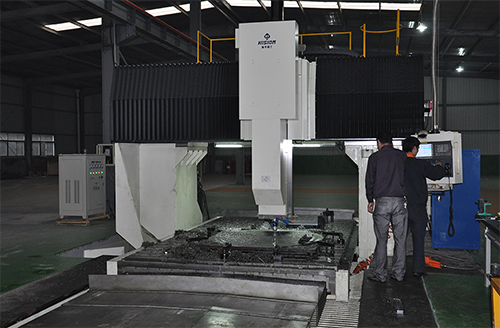 12 2026-08
CNC Machining Tolerances: A Practical Guide for Designers and Buyers
CNC machining tolerances define the permitted variation in a part’s size, form, orientation and location. There is no single “standard tolerance” that suits every machined feature. Use a documented general tolerance for noncritical dimensions, then apply individual dimensional or geometric controls only where assembly, sealing, alignment, motion or interchangeability requires them.