
What is the difference between centerless grinding and cylindrical grinding
What is the difference between centerless grinding and cylindrical grinding? A Complete Guide for Manufacturers
In the world of precision manufacturing, centerless grinding and cylindrical grinding are two fundamental processes used to achieve smooth, accurate cylindrical surfaces on metal and non-metal workpieces. While both centerless grinding and cylindrical grinding share the goal of refining workpiece dimensions and surface finish, they differ significantly in their setup, operation, applications, and performance. Understanding the difference between centerless grinding and cylindrical grinding is critical for manufacturers, machinists, and production managers to choose the right process for their specific needs—whether prioritizing high-volume production, tight tolerances, complex geometries, or cost efficiency. This comprehensive guide breaks down the key differences between centerless grinding and cylindrical grinding, explores their core principles, and helps you determine which grinding method is best for your project.
Before diving into the differences, it’s essential to establish a clear understanding of each process. Both centerless grinding and cylindrical grinding are abrasive machining techniques, meaning they use rotating abrasive wheels to remove material from a workpiece. However, the way the workpiece is held, the equipment used, and the results achieved set centerless grinding and cylindrical grinding apart. Let’s start with a detailed overview of each process, then compare their key features side by side.
1. What is Centerless Grinding?
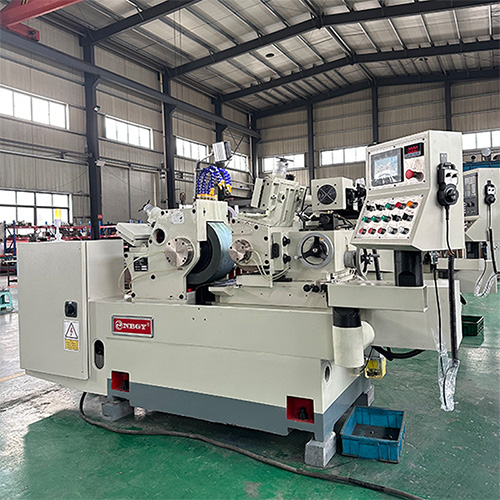
Centerless grinding is a precision machining process that grinds cylindrical workpieces without the need for a central axis or chuck to hold the part. Unlike other grinding methods, centerless grinding relies on three key components to stabilize and shape the workpiece: a grinding wheel, a regulating wheel, and a work rest blade. The workpiece is positioned between the grinding wheel (which removes material) and the regulating wheel (which controls the workpiece’s rotation speed and feed rate), while the work rest blade supports the workpiece from below. This setup eliminates the need for fixturing or centering, making centerless grinding ideal for high-volume production and parts that are difficult to hold with traditional methods.
1.1 Core Principles of Centerless Grinding
The core principle of centerless grinding is simplicity and efficiency. The grinding wheel rotates at high speed (typically 3,000–6,000 RPM) to abrade material from the workpiece, while the regulating wheel—rotating at a slower speed—controls the workpiece’s rotational velocity and axial movement. The work rest blade, positioned between the two wheels, ensures the workpiece remains stable and aligned during the grinding process. This combination allows for continuous feeding of workpieces, reducing cycle times and improving consistency. Centerless grinding does not require the workpiece to have a center hole, making it suitable for parts like pins, shafts, and rollers that may not have a central axis or cannot be clamped without damaging the surface.
1.2 Types of Centerless Grinding
There are three main types of centerless grinding, each designed for specific workpiece shapes and production needs:
Through-Feed Centerless Grinding:
This is the most common type of centerless grinding, used for long, uniform-diameter parts like rods, tubes, and shafts. The workpiece is fed axially through the grinding zone, entering one end and exiting the other, with the regulating wheel angled slightly to generate continuous axial movement. Through-feed centerless grinding is ideal for high-volume mass production, offering extremely high throughput and consistent diameter control along the entire length of the part.
In-Feed (Plunge) Centerless Grinding:
Also known as step or profile grinding, this type is used for parts with varying diameters, grooves, or complex profiles (e.g., stepped shafts, gears). The workpiece is loaded radially into the grinding zone and ground in a single plunge motion, similar to conventional plunge grinding. In-feed centerless grinding offers high precision for complex parts but is slower than through-feed grinding due to individual part loading.
End-Feed Centerless Grinding:
This type is used for short workpieces or parts with one closed end (e.g., bushings). The workpiece is fed from the end into the grinding zone, where it is held between the wheels and work rest blade until the desired finish is achieved. End-feed centerless grinding is less common but useful for specialized parts that cannot be processed with through-feed or in-feed methods.
1.3 Key Advantages of Centerless Grinding
Centerless grinding offers several distinct advantages that make it a preferred choice for many manufacturing applications:
High Efficiency:
The continuous feeding process eliminates the need for loading and unloading each workpiece individually, reducing cycle times and increasing production volume. Centerless grinding is ideal for high-volume runs, with throughput rates significantly higher than cylindrical grinding.
Consistent Precision:
Without the need for fixturing, centerless grinding reduces the risk of workpiece distortion or misalignment, resulting in consistent roundness and surface finish across large batches. It can achieve tolerances of ±0.01 mm, making it suitable for precision parts in automotive, aerospace, and medical industries.
Reduced Setup Time:
Centerless grinding machines require minimal setup compared to cylindrical grinding, especially for repetitive tasks. Once the wheels and work rest blade are aligned, the machine can run continuously with minimal operator intervention.
Suitable for Delicate Parts:
Since the workpiece is supported by the work rest blade and not clamped, centerless grinding is ideal for delicate or thin-walled parts that could be damaged by the pressure of a chuck or center support in cylindrical grinding.
1.4 Limitations of Centerless Grinding
Limited to Cylindrical Shapes:
Centerless grinding is primarily designed for cylindrical workpieces. It is not suitable for parts with complex geometries, irregular shapes, or internal surfaces (e.g., holes, bores).
Precision Alignment Required:
The grinding wheel, regulating wheel, and work rest blade must be precisely aligned to ensure consistent results. Poor alignment can lead to uneven grinding, tapered parts, or surface defects.
Less Flexibility:
Centerless grinding is less flexible than cylindrical grinding when it comes to changing part sizes or geometries. Adjusting the machine for a new part can be time-consuming, making it less ideal for small-batch or custom production.
2. What is Cylindrical Grinding?
Cylindrical grinding is a precision grinding process that grinds the outer or inner cylindrical surfaces of a workpiece by holding it between two centers (a headstock center and a tailstock center) or in a chuck. Unlike centerless grinding, cylindrical grinding relies on fixturing to secure the workpiece, allowing for precise control over the part’s position and orientation. The grinding wheel moves longitudinally along the workpiece’s axis to remove material, achieving tight tolerances and smooth surface finishes. Cylindrical grinding is versatile and can handle a wide range of part sizes, shapes, and materials, making it a staple in precision manufacturing.
2.1 Core Principles of Cylindrical Grinding
The core principle of cylindrical grinding is precise fixturing and controlled movement. The workpiece is held between two centers (for external grinding) or in a chuck (for internal grinding), ensuring it rotates around a fixed central axis. The grinding wheel, mounted on a spindle, rotates at high speed and moves along the workpiece’s length to abrade material. The feed rate (speed at which the grinding wheel moves along the workpiece) and depth of cut (amount of material removed per pass) are carefully controlled to achieve the desired dimensions and surface finish. Cylindrical grinding can be performed manually or with computer numerical control (CNC) for enhanced precision and automation.
2.2 Types of Cylindrical Grinding
Cylindrical grinding is categorized into two main types, based on the surface being ground:
External Cylindrical Grinding:
This is the most common type of cylindrical grinding, used to grind the outer surface of cylindrical workpieces (e.g., shafts, pins, gears). The workpiece is held between two centers, and the grinding wheel moves longitudinally along the part to remove material. External cylindrical grinding can be further divided into traverse grinding (the grinding wheel moves back and forth along the workpiece) and plunge grinding (the grinding wheel moves radially into the workpiece to grind a specific section).
Internal Cylindrical Grinding:
This type is used to grind the inner surface of cylindrical workpieces (e.g., holes, bores, bushings). The workpiece is held in a chuck, and a small grinding wheel is inserted into the hole to grind the internal surface. Internal cylindrical grinding requires specialized equipment and is often used for parts like bearings, hydraulic cylinders, and engine components where internal precision is critical.
2.3 Key Advantages of Cylindrical Grinding
Cylindrical grinding offers unique advantages that make it suitable for a wide range of applications:
Versatility:
Cylindrical grinding can handle a wide range of workpiece sizes, from small pins (a few millimeters in diameter) to large shafts (over a meter in length). It can also grind both external and internal surfaces, making it ideal for complex parts with multiple cylindrical features.
Tight Tolerances:
With precise fixturing and controlled movement, cylindrical grinding can achieve extremely tight tolerances (as low as ±0.001 mm) and superior surface finishes. This makes it suitable for high-precision applications in aerospace, medical devices, and automotive engineering, where even minor deviations can affect performance.
Flexibility:
Cylindrical grinding is highly flexible, allowing for easy adjustments to part sizes, geometries, and materials. It is suitable for small-batch, custom production, as well as high-volume runs with CNC automation. Machinists can quickly change the setup to accommodate different parts, making it ideal for job shops and custom manufacturing.
Ability to Grind Complex Geometries:
Unlike centerless grinding, cylindrical grinding can handle parts with complex geometries, such as stepped shafts, tapers, and contours. With CNC control, it can even grind non-cylindrical shapes (e.g., elliptical or polygonal surfaces) with high precision.
2.4 Limitations of Cylindrical Grinding
Cylindrical grinding also has some limitations that manufacturers should be aware of:
Higher Setup Time: Cylindrical grinding requires more setup time than centerless grinding, as the workpiece must be fixtured between centers or in a chuck. This can reduce efficiency for high-volume production runs.
Risk of Workpiece Distortion: The pressure from the chuck or center support can cause distortion in delicate or thin-walled workpieces, affecting precision and surface finish. This is a significant concern for parts with tight tolerances or fragile structures.
Lower Throughput: Due to the need for individual loading and unloading of workpieces, cylindrical grinding has lower throughput than centerless grinding. It is less ideal for mass production of simple cylindrical parts.
Higher Cost: Cylindrical grinding machines, especially CNC models, are more expensive than centerless grinding machines. They also require more skilled operators to set up and operate, increasing labor costs.
3. Key Differences Between Centerless Grinding and Cylindrical Grinding
Now that we have a clear understanding of each process, let’s break down the key differences between centerless grinding and cylindrical grinding. These differences cover setup, workpiece holding, precision, efficiency, applications, and cost—all critical factors for choosing the right grinding method.
1 Workpiece Holding and Setup
The most fundamental difference between centerless grinding and cylindrical grinding is how the workpiece is held during the process:
Centerless Grinding: No fixturing or centering is required. The workpiece is supported between a grinding wheel, a regulating wheel, and a work rest blade. This eliminates the need for center holes, chucks, or collets, reducing setup time and the risk of fixturing-related distortion. The setup is simple once the wheels and work rest are aligned, making it ideal for continuous production.
Cylindrical Grinding: The workpiece is held between two centers (external grinding) or in a chuck (internal grinding). This requires precise fixturing to ensure the workpiece rotates around a fixed central axis. Setup involves aligning the centers, securing the workpiece, and adjusting the grinding wheel position—all of which take time. The fixturing process can cause distortion in delicate parts, requiring careful handling.
3.2 Precision and Tolerances
Both centerless grinding and cylindrical grinding offer high precision, but their tolerance capabilities and consistency differ:
Centerless Grinding: Achieves tolerances of ±0.01 mm and excellent roundness (typically 0.001–0.005 mm). The continuous feeding process ensures consistent results across large batches, making it ideal for mass-produced parts that require uniform dimensions. However, it is less suitable for parts with extremely tight tolerances (±0.001 mm) or complex geometries.
Cylindrical Grinding: Achieves tighter tolerances (as low as ±0.001 mm) and superior surface finishes (Ra 0.02–0.1 μm). The precise fixturing and controlled movement allow for greater control over the grinding process, making it ideal for high-precision parts in aerospace, medical, and automotive industries. It can also handle complex geometries with tight tolerances, which centerless grinding cannot.
3.3 Efficiency and Throughput
Efficiency is a key differentiator between centerless grinding and cylindrical grinding, especially for high-volume production:
Centerless Grinding: Offers high throughput due to continuous feeding. Workpieces can be fed through the machine one after another, with cycle times as low as a few seconds per part. This makes it ideal for mass production of simple cylindrical parts (e.g., pins, shafts, rollers) where volume is a priority. The minimal setup time also contributes to overall efficiency for repetitive runs.
Cylindrical Grinding: Has lower throughput due to individual loading and unloading of workpieces. Cycle times are longer (typically 30 seconds to several minutes per part), making it less ideal for high-volume production. However, it is more efficient for small-batch or custom production, where flexibility and precision are more important than volume.
3.4 Applications
The applications of centerless grinding and cylindrical grinding are distinct, based on their capabilities and limitations:
Centerless Grinding Applications: Ideal for high-volume production of simple cylindrical parts, including pins, shafts, rollers, rods, and tubes. It is widely used in automotive (engine components, transmission parts), aerospace (bearings, turbine components), medical (surgical tools, prostheses), and consumer goods industries. It is also suitable for parts that cannot be fixtured (e.g., delicate or thin-walled parts) or do not have a center hole.
Cylindrical Grinding Applications: Suitable for a wide range of applications, including high-precision parts with complex geometries (e.g., stepped shafts, gears, hydraulic cylinders), internal surfaces (e.g., bores, bearings), and small-batch or custom parts. It is used in aerospace (engine components, landing gear), medical (dental equipment, prostheses), energy (rotor shafts, compressor components), and tool and die manufacturing. It is also ideal for parts that require extremely tight tolerances or superior surface finishes.
4. How to Choose Between Centerless Grinding and Cylindrical Grinding
Choosing between centerless grinding and cylindrical grinding depends on several key factors, including production volume, part geometry, tolerances, material, and cost. Here’s a step-by-step guide to help you make the right decision:
4.1 Consider Production Volume
If you need to produce large volumes of simple cylindrical parts (e.g., 1,000+ parts per day), centerless grinding is the better choice. Its continuous feeding process and high throughput will help you meet production targets efficiently. If you are producing small batches (fewer than 100 parts per day) or custom parts, cylindrical grinding is more suitable, as it offers greater flexibility and requires less time to adjust for different part sizes and geometries.
4.2 Evaluate Part Geometry
For simple cylindrical parts (no steps, tapers, or internal surfaces), centerless grinding is ideal. If your parts have complex geometries (e.g., stepped shafts, tapers, contours) or require internal grinding (e.g., bores, holes), cylindrical grinding is the only viable option. Centerless grinding cannot handle complex geometries or internal surfaces, so cylindrical grinding is necessary for these applications.
4.3 Assess Tolerance Requirements
If your parts require tolerances of ±0.01 mm or less, cylindrical grinding is the better choice, as it can achieve tighter tolerances and superior surface finishes. If your tolerances are less strict (±0.01 mm or more), centerless grinding will suffice and offer greater efficiency. For parts that require extremely tight roundness (0.001 mm or less), cylindrical grinding is preferred, as it provides more precise control over the workpiece’s rotation.
4.4 Consider Material and Part Size
Centerless grinding is suitable for a wide range of materials, including steel, aluminum, brass, and non-metals. It is ideal for small to medium-sized parts (up to 100 mm in diameter). Cylindrical grinding can handle larger parts (up to several meters in length) and harder materials (e.g., hardened steel, ceramics), as it offers more control over the grinding process and can use specialized abrasive wheels.
4.5 Factor in Cost
If cost is a primary concern and you need high-volume production, centerless grinding is more cost-effective. It has lower initial equipment costs, lower maintenance costs, and lower labor costs. If precision and flexibility are more important than cost (e.g., custom parts, high-precision applications), cylindrical grinding is worth the investment, even though it has higher upfront and operational costs.
5. Conclusion: Centerless Grinding vs. Cylindrical Grinding
In summary, the difference between centerless grinding and cylindrical grinding lies in their workpiece holding, precision, efficiency, applications, and cost. Centerless grinding is ideal for high-volume production of simple cylindrical parts, offering fast throughput, minimal setup time, and consistent results. Cylindrical grinding is more versatile, suitable for complex geometries, internal surfaces, and high-precision parts, but has higher costs and lower throughput.
By understanding these differences, manufacturers can choose the right grinding process for their specific needs, ensuring optimal efficiency, precision, and cost-effectiveness. Whether you need to produce thousands of simple shafts or a small batch of high-precision gears, centerless grinding and cylindrical grinding each have unique strengths that can help you achieve your production goals.
Remember, the key to successful grinding is matching the process to the part requirements. If you’re still unsure which method is right for your project, consult with a professional grinding service provider to get expert advice tailored to your specific application.
Related News
- Planetary Gear Reducer Ratio Calculation & Load Capacity Explained
- Drilling Gearbox: Functions, Types, Key Features, Selection Guide, and Maintenance Tips
- The Core Power Transmission Pillar of Offshore Drilling Platforms
- Precision Machined Parts: The Unsung Backbone of Modern High-Performance Manufacturing
- Why Choose a Planetary Gear Reducer for High Torque?
- How to Choose the Right Centerless Grinder for Your Production Line
Leave me a message
New Products